What happened
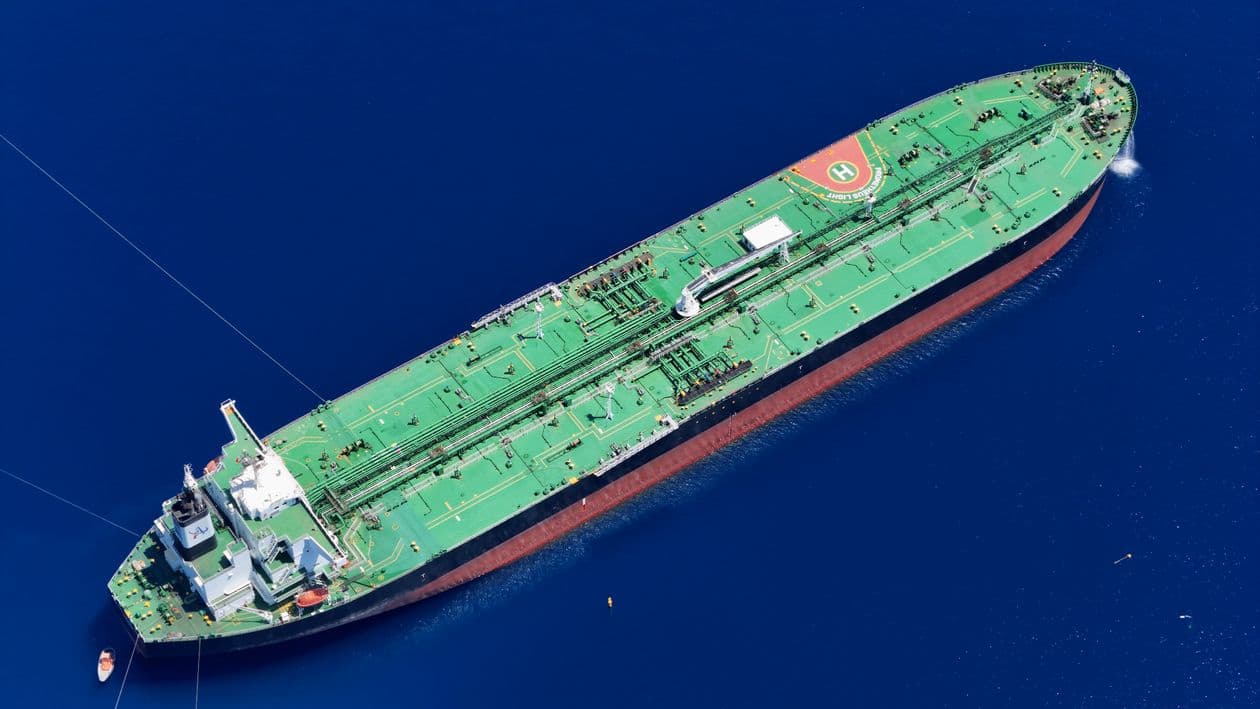
Brent crude briefly pushed above 80 dollars a barrel on Monday 13 July 2026, its highest level of the year, after Iran said it had once again closed the Strait of Hormuz and US President Donald Trump announced that America would reinstate a naval blockade on Iranian shipping.
Trump went further, demanding a 20 percent reimbursement for vessels passing through the waterway. Traders read that as a signal the standoff will not be settled quickly. West Texas Intermediate, the American oil benchmark, climbed to around 74 dollars a barrel, having started the month below 73.
Equity markets took the hit. The S&P 500 fell 0.79 percent to close at 7,515.34, while the technology heavy Nasdaq Composite dropped 1.55 percent to 25,873.18. In London the FTSE 100 held up better, edging 0.11 percent higher as its large energy constituents such as Shell and BP benefited from the very price rise that was hurting everyone else.
Government bonds sold off at the same time as shares. That is an unusual combination and it is revealing: when investors dump stocks and bonds together, they are worried about inflation, not about a slowdown.
Why it matters
The Strait of Hormuz is the narrow sea channel between Iran and Oman. Roughly one fifth of all the oil carried by ship anywhere in the world passes through it, along with a very large share of global liquefied natural gas. There is no practical way around it at scale. Pipelines exist, but they can carry only a fraction of the volume.
That is why a political dispute in a stretch of water most people could not point to on a map ends up on a UK petrol receipt. Oil is priced globally. It does not matter that Britain buys very little Iranian crude. If supply anywhere is threatened, the price everywhere goes up.
Higher oil feeds through into the cost of almost everything that has to be moved, heated or manufactured. Haulage, airlines, chemicals, plastics, fertiliser and food distribution all get more expensive. Economists call this a supply shock, meaning prices rise for reasons that have nothing to do with people wanting to buy more.
Supply shocks are the hardest problem central banks face. Raising interest rates cannot produce more oil. All it can do is squeeze demand elsewhere in the economy until the overall price level settles down, which means slower growth and weaker jobs.
Explained simply
Think of the Strait of Hormuz as a single lane bridge that a fifth of all the oil at sea has to cross. Block the bridge and it makes no difference how much oil is stacked up behind it.
Oil is not really one market. It is a global auction. Every tanker at sea is bid for by refineries all over the world, and the price is set by whoever needs the next barrel most urgently. When a supply route is threatened, buyers do not calmly wait to see what happens. They bid early, because being short of crude is far more painful than paying a little too much for it.
That is why prices can jump before a single barrel has actually gone missing. The market is pricing the risk, not the reality. If the strait reopens and tankers sail normally, much of the increase can unwind within days.
The knock on effect works through what economists call pass through. A refinery pays more for crude, so it charges a forecourt more for petrol. A haulier pays more for diesel, so it charges a supermarket more for delivery. The supermarket charges you more for a bag of pasta. Each step takes a few weeks, which is why oil shocks show up in the inflation figures with a lag of one to three months.
Meanwhile bond investors do the arithmetic. If inflation is coming back, the interest rates they are being paid on existing bonds look too low. So they sell, and bond yields rise. That is exactly what happened on Monday, and it is why mortgage pricing is quietly connected to a naval standoff in the Gulf.
What it means for you
The most immediate effect is at the petrol pump. As a rough guide, a sustained 10 dollar move in Brent works through to roughly 6p to 7p per litre in UK forecourt prices, arriving over two to four weeks. With Brent starting the month near 73 dollars and touching 80, drivers should expect prices to drift up rather than fall over the summer. A 55 litre tank refilled weekly means around 3 to 4 pounds a week extra, or roughly 180 pounds a year.
If you hold a FTSE 100 tracker, this news is not all bad. The index is unusually heavy in oil and gas, so a rising crude price supports it while dragging down technology heavy indices such as the Nasdaq. That is a reminder of why holding both a UK and a global fund tends to smooth the ride.
Mortgage holders should watch the bond market rather than the oil price. UK fixed rate mortgages are priced off swap rates, which follow gilt yields. If yields keep climbing, the best two and five year fixed rates on offer today, currently clustered around 4.2 to 4.6 percent, could be repriced upward within weeks. If you are within six months of the end of a fixed deal, it is worth securing a rate now, since most lenders let you switch for free if pricing improves before completion.
Savers, by contrast, get a small consolation. Rising yields make it more likely that easy access accounts stay near 4 percent rather than drifting down, and fixed rate bonds may become slightly more generous.
The bigger picture
Oil shocks have a long history of setting the direction of the whole economy. The 1973 and 1979 crises produced double digit inflation and deep recessions. The 2022 shock after the invasion of Ukraine pushed UK inflation above 11 percent. In every case the pattern was similar: a supply disruption, a rapid price spike, and a painful adjustment as central banks tightened policy to stop the rise becoming permanent.
The good news is that developed economies now use far less oil per pound of output than they did in the 1970s, and the UK electricity system is far less dependent on oil in particular. The bad news is that the starting point matters. Britain enters this shock with inflation already at 2.8 percent and heading higher on energy costs alone.
What to watch next: whether tankers actually resume transit through the strait, the level of the 10 year gilt yield, and the July inflation reading due next month. If Brent settles back below 75 dollars quickly, this will be remembered as a scare. If it holds above 85, it becomes a genuine problem for the Bank of England.


