What happened
Brent crude, the global benchmark oil price, rose 3.57 percent to 86.27 dollars a barrel on Tuesday morning, adding to a 9.6 percent jump the day before that closed the September contract at 83.30 dollars. That Monday move was the largest one day gain in the international oil benchmark since May 2020.
The trigger was President Donald Trump declaring that the interim memorandum of understanding signed with Iran on 17 June is over, and announcing that the United States will reinstate its naval blockade of Iranian ports near the Strait of Hormuz. US Central Command confirmed the blockade takes effect at 16:00 Eastern time on Tuesday 14 July, which is 21:00 in London.
Trump went further, saying Washington will levy a fee on every vessel transiting the strait at a rate of 20 percent on all cargo shipped. In effect the United States is proposing to run a toll booth on the single most important stretch of water in the global energy system.
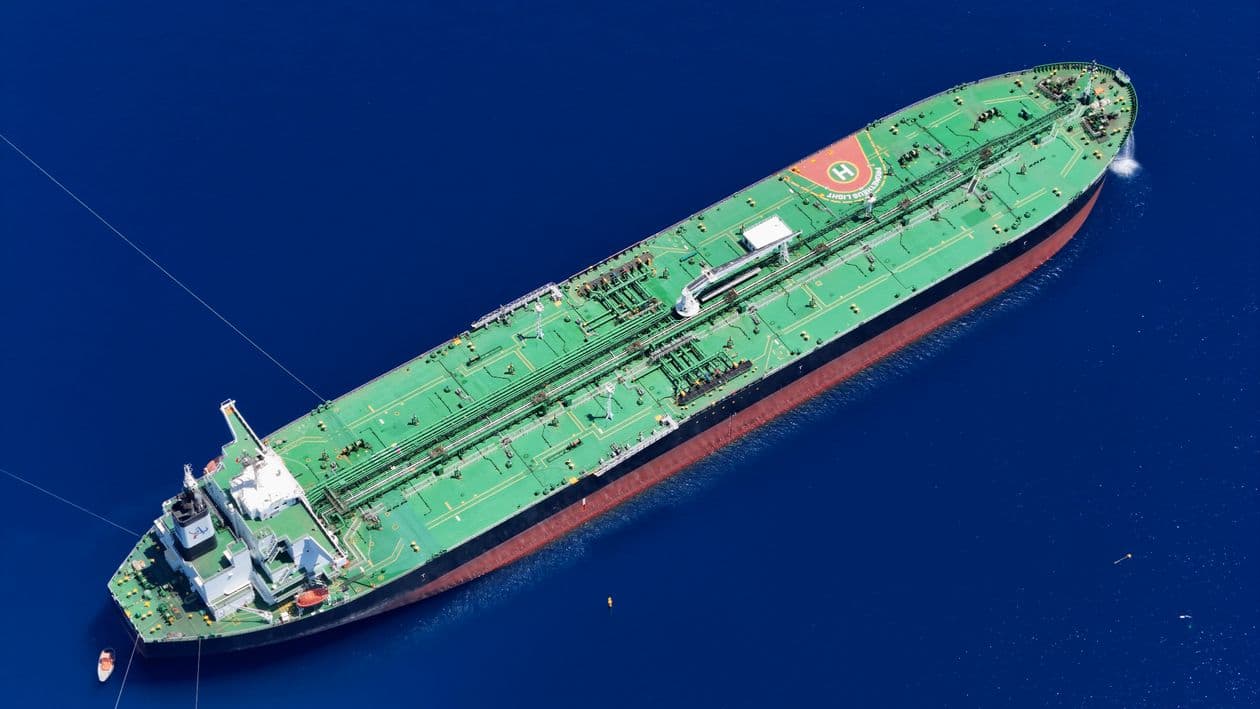
The physical impact is already visible. Roughly 15 million barrels of oil crossed the strait on Monday. By Tuesday that had fallen to around 6 million, and traffic has been thinning further as tanker owners and their insurers pull back rather than risk a naval confrontation.
Why it matters
The Strait of Hormuz is a two mile wide shipping channel between Iran and Oman through which roughly a fifth of the world seaborne oil supply passes every single day. There is no meaningful alternative route. When it narrows, every barrel of oil on the planet gets more expensive, not just the ones on the tankers stuck in the queue.
Energy prices sit at the base of almost every other price in the economy. Diesel moves the lorries that stock the supermarkets. Gas prices set electricity prices in Britain because of how the wholesale power market is designed. Fertiliser is made from gas, so food prices follow with a lag of months.
This is why an oil shock is uniquely nasty for central banks. It pushes inflation up and economic growth down at the same time, which means whichever lever they pull makes one of the two problems worse. Raise rates to fight inflation and you deepen the slowdown. Cut rates to support growth and you feed the inflation.
Energy shares are the one obvious winner. Shell rose 2.3 percent to 3,109 pence, and the oil and gas heavyweights are a big enough slice of the FTSE 100 to keep the London index afloat even while the rest of the market wobbles.
Explained simply
Think of the Strait of Hormuz as the single doorway out of a crowded stadium. It does not need to be locked for panic to start. It only needs to look like it might be.
Here is the mechanism. Oil is priced globally, which means there is essentially one world price rather than a British price and an American price. If supply is threatened anywhere, buyers everywhere compete for the barrels that remain, and the price for everyone goes up.
Crucially, the oil price responds to fear as much as to fact. Traders are not buying the oil they need today, they are buying insurance against the oil they might not be able to get in three months. That is why prices can jump 9 percent in a day when the actual number of barrels physically lost is still small.
The 20 percent cargo levy is the genuinely novel part, and it is worth pausing on. A toll is a tax on movement. If it sticks, it does not just raise the price of oil during a crisis, it permanently raises the cost of moving energy from the Gulf to the rest of the world, and that cost gets passed down the chain to the person filling up a car in Manchester.
The chain runs like this: crude price up, refinery costs up, wholesale petrol and diesel up, forecourt prices up, delivery costs for every shop up, shelf prices up. Each link takes a few weeks, which is why an oil spike today shows up in your weekly shop in the autumn.
What it means for you
Start with the pump. UK forecourt prices track crude with a lag of roughly two to three weeks, and the rule of thumb is that a sustained 10 dollar rise in Brent adds about 6 to 7 pence per litre to petrol. Brent has moved from the low 70s to the mid 80s in a matter of days. If that holds, drivers should expect to pay meaningfully more per litre by early August, which on a typical 50 litre fill up is a few extra pounds every time.
Then energy bills. The Ofgem price cap is reset quarterly using wholesale gas prices from a lookback window, so a spike now does not hit your direct debit immediately, but it does load the dice for the next cap review. If you are on a fixed tariff that ends this autumn, it is worth checking what fixes are currently available before wholesale panic gets priced into them.
For investors, this is a rare moment when the FTSE 100 has an advantage over the S&P 500. London is unusually heavy in oil, gas and mining, so a FTSE 100 tracker gets a natural hedge against energy shocks that a US technology heavy fund simply does not have. If your entire ISA is in a global fund dominated by American tech, you are more exposed to this than you might think.
Anyone holding a cash buffer should resist the temptation to react. Oil spikes driven by geopolitics historically reverse quickly when the geopolitics calms, and the worst outcome is selling investments into fear and buying them back higher.
The bigger picture
Every serious global inflation episode of the past fifty years has had oil somewhere near the centre of it: 1973, 1979, 2008, and 2022. The pattern is depressingly consistent. A supply shock in the Middle East raises prices, central banks tighten policy to contain the second round effects, and a recession follows about a year later.
What is different this time is that the disruption is being deliberately created by the United States rather than by a producer country withholding supply. That makes the outcome unusually hard to model, because it depends on political decisions rather than geology, and political decisions can reverse in a single announcement.
Watch two things. First, whether the blockade actually takes effect at 21:00 London time tonight. Second, whether OPEC members outside the Gulf signal they will pump more to fill the gap. If they do, this spike deflates quickly. If they do not, 86 dollars is a floor rather than a ceiling.


