What happened
Nvidia will publish results for the second quarter of its 2027 financial year after the US market closes on Wednesday 26 August, with the analyst call scheduled for 5pm New York time, which is 10pm in the UK. It is the single most closely watched corporate report of the quarter.
The company itself has guided to revenue of 91 billion dollars, plus or minus 2 percent. A consensus of forty analysts sits marginally above that at 91.85 billion dollars, with earnings of around 2.08 dollars a share. The more optimistic estimates run to between 93 and 95 billion dollars, which would be growth of roughly 96 percent against the same quarter a year earlier.
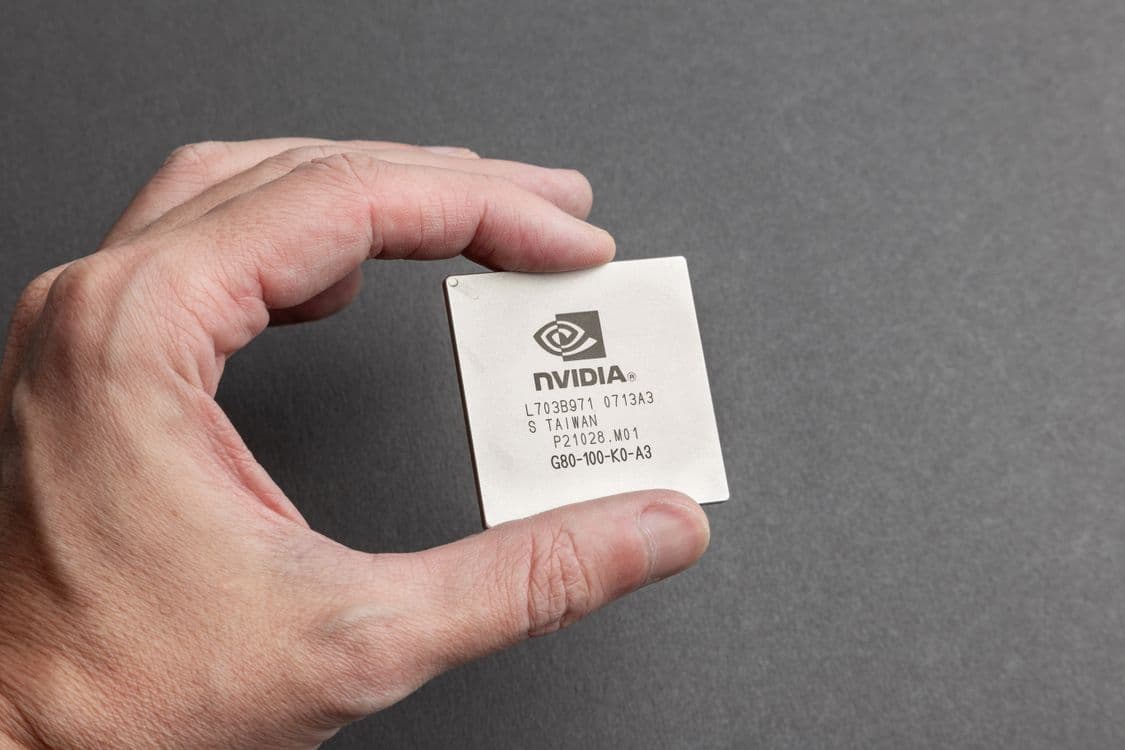
The overwhelming majority of that revenue comes from the data centre division, which sells the graphics processors used to train and run artificial intelligence models. Nvidia is no longer meaningfully a gaming company. It is the supplier of the physical infrastructure on which the AI industry is built.
Markets have been positioning nervously ahead of it. The Nasdaq 100 halted a five day decline in the run up to the results, while Nvidia shares themselves fell 1 percent on Friday. Earlier this month the S and P 500 topped 7,800 intraday for the first time and set a record close of 7,798.99, a level reached largely on the strength of AI related shares.
Why it matters
Nvidia has become large enough that its results are a macroeconomic event rather than a corporate one. It is among the most valuable listed companies in the world, which means it carries an outsized weight in the S and P 500 and in the global indices that track it. A significant move in one stock can shift the entire index.
The report also functions as a health check on capital spending across the technology sector. Nvidia revenue is largely other companies capital expenditure. Microsoft, Amazon, Alphabet and Meta buy the chips, so Nvidia sales tell you in near real time how much the largest technology firms are actually committing to artificial intelligence, as opposed to how much they say they are committing.
That matters because a substantial part of the rise in global stock markets over the past three years has rested on the assumption that AI spending will keep compounding. If Wednesday shows demand still running ahead of supply, the assumption holds. If growth decelerates faster than expected, the justification for current valuations across the whole sector weakens at once.
The reporting bar is also uncomfortably high. Beating expectations is not enough when expectations already assume 96 percent growth. Nvidia has repeatedly exceeded its own guidance, and markets have come to price in a beat, meaning that merely meeting guidance could be read as a disappointment.
Explained simply
During a gold rush, the reliable fortune is made selling shovels. Nvidia sells the only shovels that work, and Wednesday tells us whether the prospectors are still buying them by the trainload.
Artificial intelligence models are built by performing an enormous number of relatively simple mathematical operations at the same time. Ordinary computer processors are designed to do a small number of complex tasks in sequence. Graphics processors, originally built to draw video game images, are designed to do thousands of simple calculations simultaneously, which turns out to be exactly what training an AI model requires.
Nvidia dominates this market not only through the chips themselves but through the software layer that runs on them. Developers have spent nearly two decades writing AI code for Nvidia hardware, and rewriting it for a competitor is expensive and slow. That accumulated software dependency is the real barrier to entry, and it is why competitors with comparable silicon have struggled to take share.
Guidance is the forecast a company gives for the quarter ahead. It is often more important to the share price than the results just reported, because markets value future earnings rather than past ones. Investors will spend far more attention on what Nvidia says about the October quarter than on the numbers for the July quarter.
The phrase plus or minus 2 percent on guidance is a deliberate range. Nvidia is signalling that it expects between roughly 89 and 93 billion dollars, and setting a bar it is confident of clearing. Companies that consistently guide conservatively and then beat build credibility with investors, which is itself worth something.
What it means for you
If you hold a global equity tracker or a US index fund, whether directly or through a workplace pension, you own Nvidia. In most global trackers it is among the two or three largest single holdings, often accounting for 4 to 6 percent of the fund on its own. A 10 percent move in the share price shifts such a fund by roughly half a percentage point before anything else happens.
That concentration is worth checking rather than assuming. Log into your pension, look at the top ten holdings of your default fund, and see how much sits in a handful of American technology companies. Many people discover their supposedly diversified portfolio is a concentrated technology bet with extra steps.
If the concentration is uncomfortable, the remedy is not to sell out of equities. It is to add exposure that behaves differently, such as a global equal weight fund, which holds the same companies in equal proportions rather than by size, or a broader allocation including UK and emerging market shares. Doing this at a calm moment is far better than doing it after a fall.
Trading around the result itself is a poor idea. Nvidia routinely moves 5 to 10 percent on results day in either direction, and options markets price that in advance, so the apparent opportunity has already been captured by professionals. Watch it as information about your existing holdings rather than as a trade.
The bigger picture
Nvidia has grown from a specialist chip designer into one of the largest companies on earth in the space of about four years, driven by a step change in demand that almost nobody forecast. Growth of that speed and scale is historically rare, and it is mathematically impossible to sustain indefinitely. Doubling revenue every year from a base of 91 billion dollars a quarter runs into the physical limits of manufacturing capacity and customer budgets before long.
The question for investors is therefore not whether growth slows but when, and how gracefully. A gradual deceleration from extraordinary to merely excellent is a manageable outcome. An abrupt stop, driven by customers pausing to digest the capacity they have already bought, is the scenario that would reprice the entire sector.
Watch three things on Wednesday: the October quarter guidance, what management says about supply constraints, and any comment on customer concentration, since a small number of large buyers account for a very large share of sales. Those will tell you more about the next year than the headline revenue figure will.


