What happened
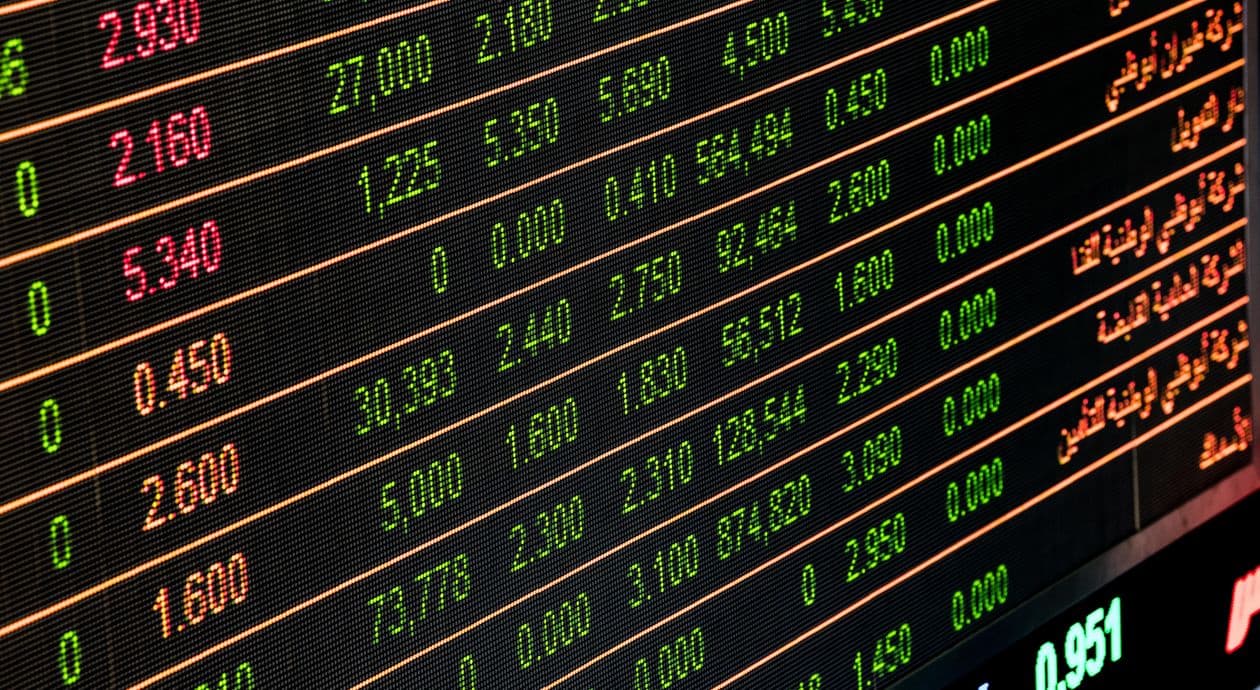
US stocks closed at a five week high, with the S&P 500 finishing up 0.42 percent at 7,575.39. The index tracks the 500 largest listed companies in America and is the benchmark most global investors actually mean when they say the market.
The move was narrow rather than broad. Nvidia, the chipmaker whose processors power almost every serious artificial intelligence system in the world, rose around 4 percent. Meta Platforms, the owner of Facebook, Instagram and WhatsApp, jumped roughly 6 percent. Because both are among the largest companies in the index by market value, those two names did most of the heavy lifting on their own.
The backdrop is a market that has spent recent weeks nervous about the conflict between the United States and Iran. Investors have grown more confident that the fighting will stay regionally contained rather than spilling into a wider disruption of global oil supply, and oil prices have retreated from their earlier highs. That easing of fear is what allowed risk appetite to return.
Meanwhile the Federal Reserve has held its main interest rate at 3.5 to 3.75 percent, giving markets a stable rate backdrop to rally against.
Why it matters
If you have a pension in the UK, you almost certainly own a lot of America. Global equity funds typically allocate somewhere around 60 to 70 percent of their money to US shares, simply because that is how much of the world stock market America represents. So a good day on the S&P 500 is a good day for your retirement pot, whether or not you have ever bought a US stock.
But the composition of this rally is the part to notice. When an index rises because two enormous technology companies rose, that is not the same as a rally where 400 of the 500 companies went up. Narrow rallies are more fragile, because the same concentration that lifts the index can drop it just as fast.
The AI trade sits at the centre of this. Nvidia and Meta are both, in different ways, bets that artificial intelligence will generate enormous profits. Nvidia sells the picks and shovels. Meta is spending vast sums to build AI into its products. When investors feel optimistic about AI, both go up together, and because they are so large, the whole index follows.
It also tells you something about how markets are reading geopolitics: as a risk that has been priced and, for now, discounted.
Explained simply
The S&P 500 is not a democracy, it is a shareholders meeting where votes are weighted by wealth. A handful of trillion-dollar companies can carry the whole room while everyone else sits still.
Here is the mechanism. The S&P 500 is market-cap weighted, meaning each company influence on the index is proportional to its total value, not counted equally. A company worth 3 trillion dollars moves the index roughly 100 times more than a company worth 30 billion dollars.
Because a small group of technology giants have grown so vast, they now make up an outsized share of the index. So when Nvidia rises 4 percent, it can lift the entire S&P 500 by a noticeable amount even if hundreds of smaller companies in the index went nowhere or fell.
This is why the headline number can flatter reality. An investor looking only at the index sees a healthy day. An investor looking at the median company might see something duller. Neither is wrong, they are measuring different things.
The practical implication is about hidden concentration. Buying a global index fund feels like buying thousands of companies across dozens of countries, which it is. But because of how the weighting works, a very large slice of your money ends up in a handful of American technology firms. Your diversification is real, but it is less even than it looks.
What it means for you
If you hold a global tracker such as one following the MSCI World or FTSE Global All Cap, today was a modestly good day, and roughly two thirds of that gain came from America. Check what your fund actually holds: many mainstream global funds now have 20 percent or more of their total value sitting in just seven or eight US technology companies.
If you are contributing monthly to a pension or an ISA, market highs are psychologically awkward but mechanically irrelevant. Regular contributions mean you buy some units when prices are high and some when they are low, which averages your entry price over time. Trying to pause contributions because the market feels expensive is one of the most reliable ways to end up with less money.
If you are sitting on a lump sum and hesitating, the honest answer is that nobody can tell you whether 7,575 is a top or a waypoint. What you can control is your exposure: if a 20 percent fall in US technology shares would seriously damage your plans, then your allocation is too concentrated, regardless of what the market does next.
For UK-focused investors, remember the currency angle. If you hold US shares in an unhedged fund, your returns depend on both the share price and the pound-dollar rate. A rising S&P and a strengthening pound can cancel each other out.
The bigger picture
Markets have spent 2026 caught between two forces: genuine enthusiasm about the profits AI might generate, and genuine anxiety about geopolitical shocks. This week, enthusiasm won, because the Iran conflict looks contained and oil has come off its highs. That balance can flip quickly.
The longer-term question hanging over the AI rally is whether the spending translates into profit. Companies are investing staggering sums in data centres and chips. Nvidia is being paid handsomely today for that spending. Whether the firms doing the spending, Meta among them, earn a return that justifies it is a question the market has not yet answered.
What to watch: earnings season. Talk is cheap and capital expenditure is not. The results that matter are the ones showing whether AI investment is showing up as revenue rather than just cost.


