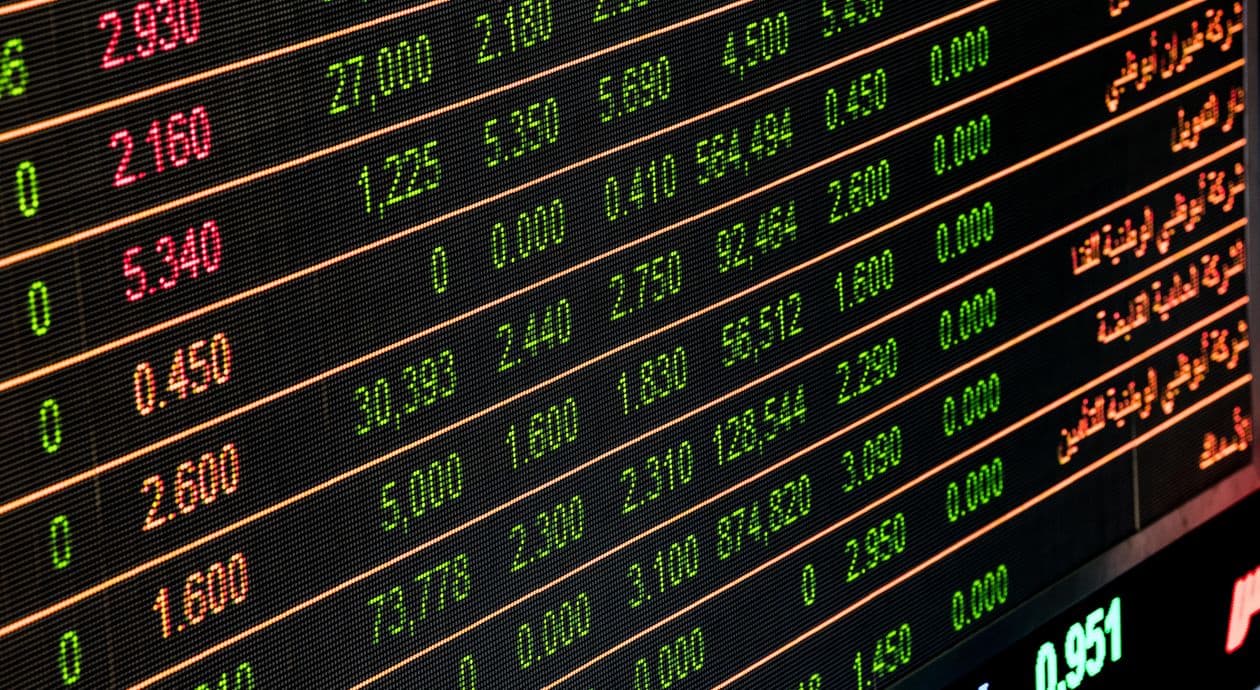
What happened
The S and P 500 fell 0.38 percent to finish at 7,718.60 on Friday 4 September, giving back most of the previous session gain of 1.1 percent that had left the index at 7,747.71. The Dow Jones Industrial Average dropped 271.86 points, or 0.51 percent, to close at 53,414.25, while the technology heavy Nasdaq Composite slipped 0.29 percent to 26,506.99.
The trigger was the August employment report released that morning. Nonfarm payrolls rose 162,000 against a consensus of 53,000, and the unemployment rate held at 4.1 percent. Bond yields jumped in response, and share prices fell as traders concluded that the Federal Reserve is now more likely to raise interest rates at its 15 and 16 September meeting than to leave them alone.
Underneath the index level the session was split rather than uniformly weak. Technology, industrials and utilities finished higher. Healthcare, consumer discretionary, communications and energy were the biggest losers, with energy dragged down by a sharp fall in the oil price on the day.
Corporate news offered some relief. Snowflake reported quarterly adjusted earnings per share, meaning profit per share after stripping out items management considers one off, of 0.62 dollars against a consensus of 0.45 dollars. Docusign rose more than 4 percent after beating on both earnings and revenue and lifting the top end of its full year revenue guidance.
Why it matters
A half percent move in a stock index is not dramatic in itself. What makes this session worth attention is the reason behind it. Shares fell because the economy looked strong, which is the signature of a market whose main worry has shifted from growth to interest rates.
When investors fear recession, good economic news lifts share prices. When investors fear rate rises, good economic news sinks them, because a stronger economy means a central bank with more reason to tighten. That inversion tells you where the anxiety currently sits, and it has consequences well beyond a single trading day.
Higher interest rates hurt share valuations through a mechanical channel. Companies are valued on the profits they are expected to generate in future, and those future profits are discounted back to a present day figure using an interest rate. Raise the rate and the present day value falls, with the sharpest effect on companies whose profits are furthest in the future.
This matters directly to British savers because almost every workplace pension default fund holds a large slice of US equities. The S and P 500 alone represents a substantial share of global stock market value, so what happens in New York shows up in UK pension statements regardless of how the FTSE performs.
Explained simply
The stock market is a machine for pricing tomorrow, not today. Strong jobs data is good news for the economy but bad news for that machine, rather like a sunny forecast being welcome unless you happen to sell umbrellas.
Start with what a share actually is. Owning a share means owning a claim on a slice of a company future profits. To decide what that claim is worth today, investors estimate those future profits and then reduce them to reflect the fact that money in ten years is worth less than money now.
The size of that reduction depends on interest rates. If you can earn 5 percent risk free by lending money to the US government, you will only accept the risk of owning shares if the expected reward is meaningfully better. Push the risk free rate up and the whole calculation shifts against shares.
That is why a jobs report moved share prices. Nobody changed their view of how many products these companies will sell. What changed was the interest rate used to translate future profits into a price today, and that single input runs through every valuation on the exchange.
The sector split follows the same logic. Utilities and industrials generate steady near term cash and are less exposed to the discounting effect. Energy fell for a separate reason entirely, which was the oil price dropping by more than two dollars a barrel that morning.
What it means for you
If you hold a global tracker fund or an S and P 500 index fund inside a stocks and shares ISA or a self invested personal pension, this session cost you roughly 0.4 percent on the US portion of your holdings. On a 20,000 pound US allocation that is about 80 pounds, which is well inside normal daily variation.
The practical point for regular investors is not to change course over one day. If you pay into a pension monthly, falling prices mean your next contribution buys more units, which works in your favour over a working life. Trying to time entry around jobs reports is a reliable way to be out of the market on the days that matter most.
If you are drawing an income from investments rather than accumulating, the calculation differs. Selling units into weakness locks in the fall, so holding twelve to twenty four months of planned withdrawals in cash or short dated bonds lets you leave equity holdings alone through a rough patch.
For anyone holding individual technology shares, be aware that this is precisely the category most sensitive to rising rates. A portfolio that is heavily concentrated in growth names will move considerably more than the index in both directions.
The bigger picture
US equity indices remain close to record territory despite this pullback, having climbed through 2026 on strong corporate earnings and enthusiasm for artificial intelligence spending. The question hanging over the rest of the year is whether that strength can survive a genuine turn back towards tighter monetary policy.
The 15 and 16 September Federal Reserve meeting is now the single most important date on the calendar. Before it arrives, the August inflation reading will either confirm or defuse the case for a rise.
Watch bond yields as the leading indicator. If the ten year US Treasury yield keeps climbing, equity valuations will stay under pressure regardless of how good corporate results look.


