What happened
Oil prices swung wildly in the space of 24 hours. Brent crude, the international benchmark, climbed 1.98 percent to 84.95 dollars a barrel, while US West Texas Intermediate rose 1.82 percent to 79.56 dollars. Earlier in the week the move had been far more violent — crude surged more than 9 percent after President Donald Trump announced the US Navy would reimpose a blockade on Iranian ships transiting the Strait of Hormuz.
The more startling part of the announcement was a demand that all other cargo passing through the waterway pay the United States a protection fee equal to 20 percent of its value. On a fully laden supertanker at current prices, that works out at roughly 32 million dollars — sixteen times the toll Iran itself had been charging. On Tuesday, Trump dropped the demand, and prices immediately came off their highs.
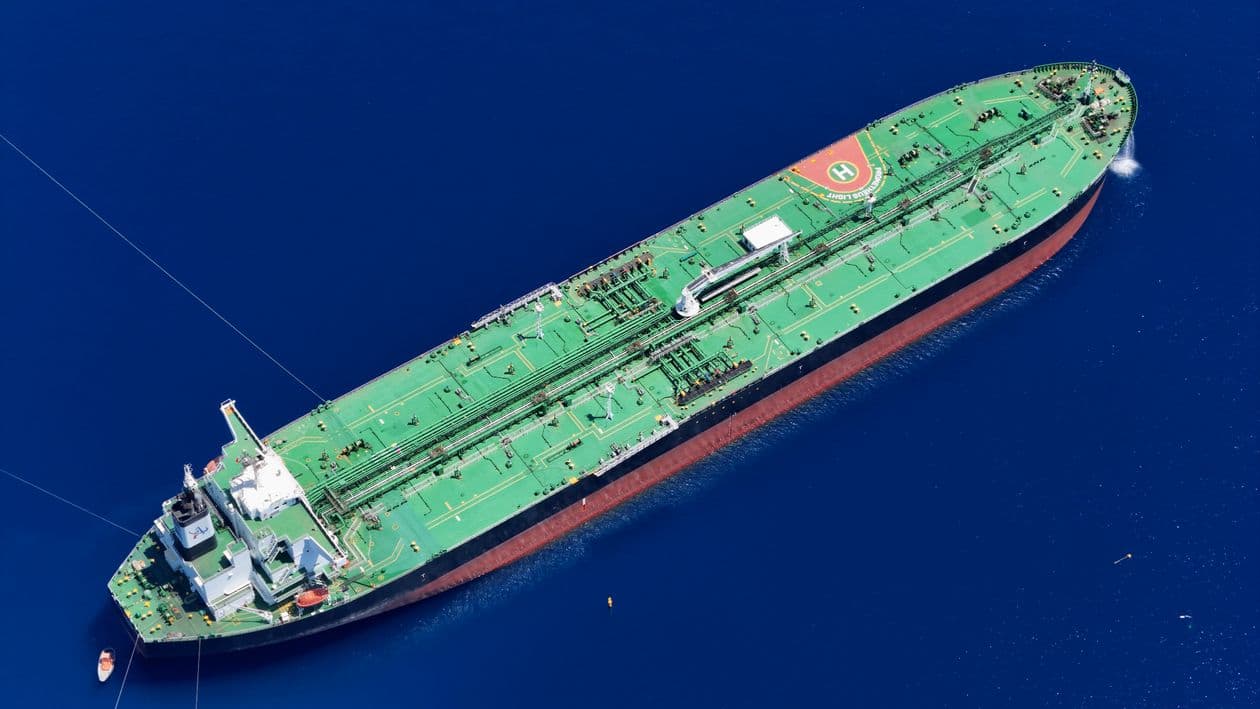
The physical disruption is severe and continuing. Just six vessels crossed the Strait in one twelve hour window on 11 July, against 18 to 22 a day before the fighting resumed. Around 230 loaded oil tankers are currently sitting inside the Gulf with nowhere to deliver their cargo.
The FTSE 100 fell about 0.62 percent to 10,433.12 in morning trade as the oil rally and the wider risk off mood weighed on London shares.
Why it matters
Roughly a fifth of the worlds seaborne oil passes through the Strait of Hormuz, a channel that narrows to about 21 miles at its tightest point. There is no alternative route of comparable capacity. When traffic through it slows, the effect on global prices is immediate and mechanical.
Oil is not just a commodity. It is an input into almost everything else. It moves goods to shops, powers factories, produces fertiliser, and is the raw material for plastics. A sustained rise in crude therefore does not just show up on a petrol receipt — it works its way into the price of food, clothing and furniture over the following six to twelve months.
That is why central bankers watch oil with such anxiety. An energy price shock creates inflation they cannot control with interest rates, while simultaneously slowing the economy by taking money out of household pockets. It is the worst of both worlds, and it is precisely the trap the Bank of England is currently trying to navigate.
For the UK specifically, the effect is doubly awkward. Britain imports most of its energy, so higher crude means a bigger import bill and a weaker pound, which in turn makes every other import more expensive.
Explained simply
The Strait of Hormuz is a single lane country bridge that a fifth of the worlds oil has to cross. Put a soldier at each end asking questions, and the traffic does not stop — it just backs up for miles, and everybody behind pays for the delay.
Think about how the oil price is actually set. It is not a fixed number handed down by anybody. It is the outcome of a continuous auction between buyers who need oil and sellers who have it, and like any auction it is exquisitely sensitive to how much is available right now.
Oil supply is what economists call inelastic, which simply means it cannot be increased quickly. You cannot drill a new well in a fortnight. So when supply is threatened, the only thing that can adjust is the price, and it adjusts fast and hard. A 2 percent shortfall in available oil can move the price 10 percent, because the buyers who most need it will outbid everyone else.
The 20 percent toll, had it been imposed, would have worked exactly like a tax on every barrel crossing the bridge. Tankers would have had three choices: pay it, avoid the Strait entirely, or wait. All three reduce the oil actually reaching market, and all three push the price up. That is why the announcement sent crude up 9 percent, and why withdrawing it brought prices straight back down.
The 230 tankers now stranded inside the Gulf are the physical form of that uncertainty. They are full of oil that the world wants and cannot reach — value sitting still, waiting for the politics to resolve.
What it means for you
Start with the fuel pump, because that is where it lands first. UK forecourt prices track crude with a lag of roughly two to six weeks. As a rough rule, a 10 dollar move in Brent feeds through to about 6 to 7 pence a litre at the pump. If Brent settles near 85 dollars and stays there, drivers should expect prices to drift up from current levels over the next month. On a 55 litre tank filled fortnightly, seven pence a litre is around 100 pounds a year.
Household energy is the slower, larger channel. The UK energy price cap already rose 13 percent in July, and crude prices feed into gas and electricity contracts with a lag of several months. Fixed tariffs currently on the market are worth a careful look: if you can lock in a fixed rate close to the current cap, you are buying insurance against exactly this scenario.
For investors, the FTSE 100 is unusual in that it is roughly 12 to 15 percent oil and mining shares. That means a UK tracker is partially hedged against an oil shock — Shell and BP rise while the rest of the index falls. It is cold comfort, but it is real, and it is one reason a FTSE 100 tracker behaves differently from a US one in a crisis like this.
If you have a holiday booked, note that airlines hedge fuel months in advance, so ticket prices you have already paid will not change. New bookings for late 2026 are where any fuel surcharge will show up.
The bigger picture
Every oil shock in modern history has followed a similar arc: a supply disruption, a panic spike, a plateau, and then a slow decline as demand adjusts and new supply arrives. The 2026 Hormuz crisis has so far followed the script. Brent is already about 40 percent below its April peak.
The forecasters are cautiously optimistic. Citigroup has suggested Brent could fall to 60 dollars a barrel by year end if the Strait reopens properly, on the grounds that the 230 stranded tankers and the deferred production would then flood the market at once, producing a glut.
That is the key thing to watch: not the daily headlines about tolls and blockades, but whether tanker traffic through Hormuz returns to its normal 18 to 22 vessels a day. If it does, this inflation scare fades. If it does not, the Bank of England has a much harder autumn ahead.


